


What to Do If Your Document Comes from a Non-Hague Convention Country?

When you need to use a document abroad—such as a birth certificate, diploma, power of attorney, court decision, or commercial document—the first question is how it can be officially recognized by the authorities in the other country. In countries that are party to the 1961 Hague Convention, the solution is usually an apostille: a one-step certification by a competent authority. But if the document was issued in a non-Hague country, the rules differ and the process involves consular legalization—a sequence of certifications by several institutions.
This article aims to guide you through the key concepts and practical steps in clear, neutral, international English—no legalese. We explain what “non-Hague Convention country” means, how apostille and consular legalization differ, which authorities are involved, and how to plan the process to avoid delays and extra costs. We’ll cover common document types (personal, educational, and corporate), requirements for official translations, and practical considerations for individuals, students, professionals, and companies operating across borders.
You’ll also find a structured comparison of apostille vs. consular legalization (in table form) so you can see at a glance what to expect in terms of time, cost, and complexity. We also highlight frequent pitfalls—such as incorrect formats, missing signatures/stamps, expired validity, or inconsistent personal data—and how prevention can save you weeks.
Whether you are relocating for work or study, expanding a business, getting married, or dealing with inheritance matters, proper legalization is critical for international recognition of your documents. The sections that follow provide a clear roadmap: from definitions, authorities, and the detailed process to comparisons, common hurdles, and proven practices. Our goal is to give you a practical guide you can follow confidently—regardless of the issuing country and the country where the document will be used. (more…)
- Published in Language Services
Translation and Legalization of Documents for International Education Partnerships


International partnerships in education are becoming increasingly important for the development of academic exchange, scientific research, and the enrichment of educational systems worldwide. For these partnerships to be successful and effective, various documents need to be properly recognised abroad. This includes cooperation agreements, academic diplomas, certificates, and other official documents that verify achievements and qualifications. The translation and legalisation of these documents are key to their international recognition and usage.
The process of translating and legalising educational documents involves several steps to ensure that they will be recognised by foreign institutions and have legal validity outside the country in which they were issued. This may include apostille, consular certification, and accurate translation of specialised academic terms.
Types of Documents for International Partnerships in Education
International educational partnerships involve various types of documents that often need to be translated and legalised to be recognised abroad. These can range from cooperation agreements and university contracts to academic certificates and research results, which are used for scientific or educational purposes. Some of the main documents that may be required in these partnerships include:
- Cooperation Agreements
Cooperation agreements between educational institutions, universities, or colleges are often foundational for international programmes, research projects, and academic exchange programmes. These documents typically contain details about the terms of cooperation, the rights and obligations of each party, and need to be recognised by all partners. Legalisation of these documents is necessary to ensure that they will be valid outside the country where they were signed. - Academic Certificates and Diplomas
Academic documents such as diplomas, certificates of completed education, and academic transcripts must be translated and legalised to be recognised by foreign educational institutions. Students participating in exchange programmes or applying for study abroad often need to present diplomas and certificates that must be officially recognised by the institutions in the host country. - Protocols and Agreements
Protocols and agreements that establish the details of collaboration in academic and scientific research must be translated and legalised to be recognised by international partners. These documents often contain important information regarding the allocation of funds, requirements for research outcomes, and other key conditions that need to be confirmed by all participants. - Research Results and Scientific Publications
Results from scientific research and academic publications are also important documents in international academic partnerships. These may be used to share new discoveries, create joint research projects, or for teaching purposes. To be recognised and used by foreign institutions, these documents often require legalisation. - Recommendation Letters and References
Recommendation letters and references from lecturers, academic advisors, or programme directors can also be part of documenting academic achievements or applications for educational programmes. These documents often need to be translated and legalised to be recognised by foreign educational and academic institutions.
When Is Translation and Legalisation of Documents Required?
The translation and legalisation of documents for international educational partnerships are necessary in various situations where these documents need to be recognised and valid abroad. These documents are often required for participation in exchange programmes, for collaboration between universities, or for gaining recognition of academic achievements in a foreign country.
- Partnerships Between Universities and Educational Institutions
International partnerships between universities and other educational institutions often involve the signing of various agreements and contracts. These documents typically need to be legalised to be recognised by the relevant institutions abroad. If the documents are not legalised, they may not be accepted within the framework of international cooperation. - Student Exchange and International Programmes
Student exchange programmes and other academic initiatives often require students to present documents such as diplomas, certificates, and academic transcripts. These documents must be properly translated and legalised for the student to be accepted by the institution abroad and to receive recognition for their qualifications. - Recognition of Academic Achievements and Diplomas
Students and scholars who wish to gain recognition for their academic achievements abroad often need to provide legalised and translated diplomas and certificates. This is particularly important for those wishing to continue their studies abroad or to obtain professional qualifications that are recognised internationally. - Assisting Teachers and Lecturers for Employment Abroad
The translation and legalisation of diplomas and certificates for teachers and lecturers may be required by foreign educational institutions when applying for work or participation in teaching programmes abroad. These documents must meet international recognition standards to ensure that teachers can begin work in another country.
Translation and Legalisation Process
The process of translating and legalising documents for international educational partnerships involves several key steps that must be followed in the correct order to ensure their validity and recognition abroad. Each document related to academic and educational matters must undergo careful examination and verification to ensure that it is accepted and recognised by international institutions.
- Checking the Requirements of the Partner Country
The first step in the translation and legalisation process is to clarify the requirements of the country with which the partnership is being established. Different countries have different procedures for recognising documents and may sometimes require additional certifications or formats. It is important to consult with foreign institutions to understand which documents are required, which certifications will be accepted, and whether additional forms are needed.
- Choosing a Sworn Translator
Documents must be translated by a sworn translator who has the qualification to carry out translations of official documents with legal value. The sworn translator must be an expert in the relevant language combination and understand the technical and legal terminology associated with educational documents. This is crucial for the accuracy of the translation and to avoid misunderstandings that could lead to the rejection of documents abroad.
- Apostille and Consular Legalisation
Once the documents are translated, they must be legalised to be recognised by foreign institutions. Legalisation can involve two main procedures:
- Apostille: If the country where the documents will be used has signed the Hague Convention, an apostille is sufficient to certify the authenticity of the documents. The apostille is affixed by a competent authority in the country of issue and ensures that the document is valid for use in other countries that have signed the convention.
- Consular Legalisation: If the country where the documents will be used is not a signatory to the Hague Convention, consular legalisation is required. This process involves the certification of the documents by the Ministry of Foreign Affairs in the country of issue, as well as certification by the embassy or consulate of the relevant country.
- Translation of Specialised Educational Terms
Educational documents often contain specialised terms that may vary in different language and legal contexts. The translator must have in-depth knowledge of the educational system in both the issuing country and the receiving country to ensure accurate translation of all terms.
- Certification of Documents in Accordance with International Standards
Once the documents are translated and legalised, it is important that they are checked for compliance with international standards so that they will be accepted by the institutions in the recipient country. Depending on the specifics of the partnership, additional certification may be required to verify the authenticity of the documents and ensure their conformity with local requirements.
Specific Requirements in Different Countries
The requirements for translation and legalisation of educational documents can vary significantly depending on the country where they will be used. To ensure that the documents are recognised and valid, it is crucial to familiarise yourself with the specific requirements of the country with which the international educational partnership is being established.
European Union and Other European Countries
Within the European Union, documents issued by member states are mutually recognised, but this does not mean the process is automatic. Educational documents often require apostille or consular legalisation, depending on the country where they will be used. In some cases, notarial certification may also be required.
Countries such as Germany, France, and the United Kingdom have specific requirements for the recognition of academic diplomas and certificates. For these countries, documents must be accompanied by translation and legalisation that comply with local standards in order to be used for job or educational applications.
United States, Canada, Australia
In these countries, not only translation and legalisation are required, but also verification of the authenticity of academic documents through diploma validation systems. In the United States, for example, in addition to an apostille, additional verification through World Education Services (WES) is often required to confirm that the diploma is equivalent to an American qualification.
In Canada and Australia, depending on the province or state, there may be additional requirements for the legalisation of educational documents. Translations must be done by sworn translators who meet specific standards, and all documents must be legalised to be recognised by local authorities.
Asia and Latin America
In countries in Asia and Latin America, the requirements for translation and legalisation can be stricter or vary depending on the local legal system and religious or cultural customs. In Japan, for example, although the country is a signatory of the Hague Convention, additional requirements for certifying academic documents, including consular certifications, may apply.
In Brazil and other Latin American countries, religious and educational documents are also subject to additional certification by the relevant consulates, which may differ depending on the country of origin of the document.
Common Problems and How to Avoid Them
Missing Apostille or Consular Certification
One of the main issues you may encounter is the lack of an apostille or consular certification, which certifies the authenticity of the documents. Many people underestimate the necessity of legalisation and attempt to use documents without preparing them according to international requirements.
Inaccurate Translation of Academic and Educational Terms
Translating educational documents requires accuracy, especially when it comes to specialised terms that can be interpreted differently across various legal and educational systems. Inaccurate translations of terms such as “bachelor’s degree”, “master’s degree”, “diploma”, “qualification”, and others can lead to misunderstandings or rejection by foreign institutions.
Delays Due to Incorrectly Filled Forms
Some institutions require additional documents, such as specialised forms or certificates, which must be completed and submitted along with the main document. Incorrectly filled forms or missing additional documents can lead to delays in the process.
Differences in Requirements Between Countries
Each country has its own requirements for legalisation and translation of documents. For example, some countries require notarial certification of educational documents, while others accept only documents with an apostille. This can cause confusion if you are not familiar with the specific requirements.
The translation and legalisation of documents for international educational partnerships are not only important but also essential steps for ensuring their recognition and validity abroad. Whether it involves cooperation agreements, diplomas, or academic certificates, properly prepared documents ensure their legitimacy and usability in foreign institutions.
Common problems, such as missing apostilles, inaccurate translations, or incorrectly filled forms, can be avoided with careful preparation and professional assistance. To avoid delays and ensure that your documents are recognised without difficulties, it is important to trust experts who understand the requirements of international and educational institutions.
Oltrans offers comprehensive assistance in the process of translating and legalising documents for international educational partnerships. Our team provides:
- Professional sworn translations of documents tailored to the requirements of the country where they will be used
- Full organisation of the legalisation process, including apostille and consular certification
- Consultations and support with tight deadlines and specific requirements of foreign institutions
With our help, the translation and legalisation process will be smooth and hassle-free, allowing you to focus on your successful international academic partnerships.
- Published in Language Services
Translation and Legalization of Certificates of Quality and Conformity of Goods

The translation and legalization of certificates of quality and conformity are critical processes for many companies and institutions involved in international trade or providing products subject to strict regulations. These documents verify that goods meet specific standards for safety, quality, and environmental compliance, which may vary depending on the country or region in which they are offered.
The translation of these documents is particularly important as it ensures that the information is understandable to all relevant parties, including customs authorities, traders, and regulatory institutions. Legalization, on the other hand, verifies the authenticity of the document and grants it legal validity in an international context. (more…)
- Published in Language Services
Translation and Legalization of Documents Issued by Religious Institutions


Religious documents play an important role in people’s lives and are significant not only in national but also in international contexts. Many people require certificates for events that have taken place in religious institutions, such as marriage, baptism, confirmation, and others, when it comes to personal status, inheritance matters, or immigration abroad.
Documents issued by religious institutions are often used abroad and need to be recognized by foreign authorities. However, this cannot happen without prior translation and legalization. The process of translating and legalizing these documents is extremely important to ensure they are recognized as official and valid abroad, whether it concerns marriage, baptism, or other religious ceremonies.
The aim of this article is to clarify which religious documents are subject to translation and legalization, what the procedures are, what needs to be known about the apostille and consular certifications, and how to avoid the most common mistakes when using religious documents abroad. (more…)
- Published in Language Services
Translation and Legalization of Documents for International Inheritance Cases


International inheritance cases are becoming more frequent in today’s globalised world, where individuals possess assets and property in multiple countries. When someone inherits property or rights abroad, they must undergo various legal procedures to be recognised as an heir. In this process, proper document preparation and their validity in the relevant jurisdictions play a crucial role.
Translation and legalisation of documents are essential steps to ensure that inheritance documents are recognised by foreign institutions. Notarial deeds, wills, inheritance certificates, and court decisions must be translated into the official language of the relevant country and legalised in accordance with local requirements.
This article aims to explore which documents are required for international inheritance cases, why translation and legalisation are important, how the process works, and how to avoid the most common issues when dealing with inheritance abroad. (more…)
- Published in Language Services
Translation and Legalization of Medical Protocols and Prescriptions for Abroad


Health is the most valuable asset a person possesses, and when treatment abroad becomes necessary, the accurate and timely preparation of medical documents is of crucial importance. Hospitals, clinics, insurance companies and pharmacies outside Bulgaria require protocols, prescriptions and other records to be presented in a form that is both understandable and legally recognised in the respective country.
In such cases, translation and legalisation of medical documents are mandatory steps. They ensure not only the legal validity of the papers but also the correct interpretation of diagnoses, therapies and prescribed medicines. Even a minor inaccuracy in the translation of a medical protocol or prescription can have serious consequences – inappropriate treatment, refusal of admission to a medical facility, or problems purchasing medicines.
The purpose of this article is to provide clear and practical guidance: which medical documents require translation and legalisation, what the procedures involve, and how to avoid the most common mistakes. This way, every patient can be fully prepared for treatment abroad and go through the process with confidence and peace of mind. (more…)
- Published in Language Services
Translation and Legalization of Documents for Sports Competitions and Transfers


Sport has long since crossed national borders and become a truly global phenomenon. More and more Bulgarian athletes are competing internationally or signing contracts with foreign clubs, while foreign players are joining Bulgarian teams to build their careers. Behind every transfer or competition entry, however, lies not only athletic preparation but also extensive administrative and legal work.
Documents proving eligibility, contractual relations, medical fitness or transfer authorisation form the foundation of every sporting career. These must be recognised by foreign clubs, federations and institutions so that athletes can exercise their rights without obstacles. This is why translation and legalisation are essential – they ensure that documents carry legal weight abroad and are accepted by the relevant authorities.
This article explores which sports documents require translation and legalisation, why the procedures are mandatory, how the process works, and how to avoid the most common problems in international transfers and competitions. (more…)
- Published in Language Services
Translation and Legalization of Real Estate Documents


Real estate is among the most valuable assets for both individuals and businesses. Transactions often involve not only substantial financial interests but also complex legal procedures. In today’s globalised world, more and more people are buying, selling or inheriting property outside Bulgaria, while foreign nationals invest in the Bulgarian market. This inevitably creates the need to use documents issued abroad or intended for foreign authorities.
This is where translation and legalisation come in – two essential steps that ensure property documents carry legal force and are accepted by notaries, courts, banks and government bodies. Without them, deeds, certificates or court decisions issued abroad may turn out to be unusable, potentially blocking the entire transaction.
The translation of property documents demands the highest accuracy, as they contain complex legal and technical terminology. Legalisation, meanwhile, certifies the authenticity of the document, making it valid either in Bulgaria or abroad. Together, these two procedures form the key to successfully completing any property transaction with an international element.
In this article we look in detail at which documents require translation and legalisation, how the procedure works, which institutions require them, and the most common problems and ways to avoid them. (more…)
- Published in Language Services
Translation and Legalization of Military Documents and Certificates

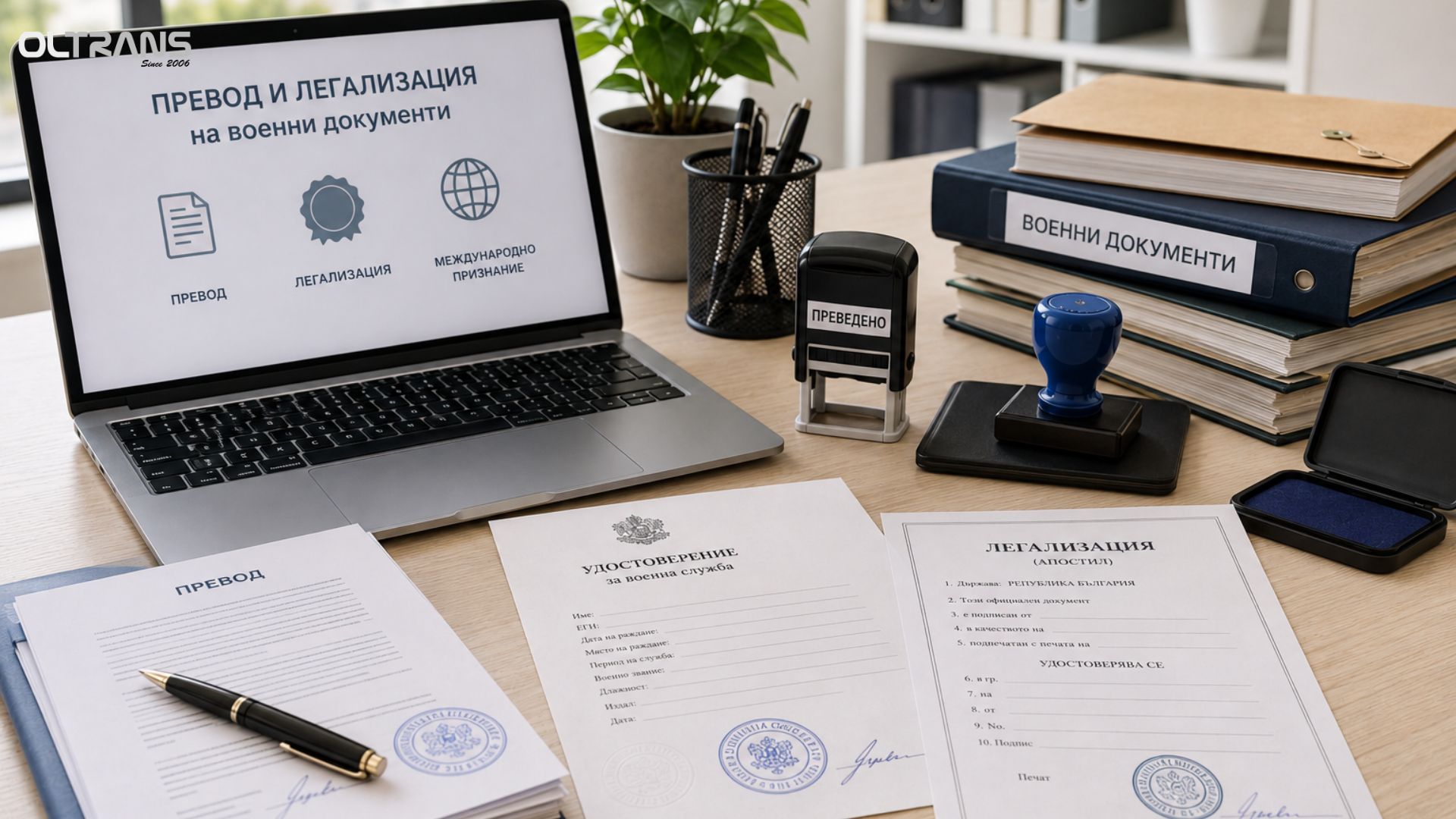
Military service is an important part of the biography and rights of many Bulgarian citizens. Whether it involves compulsory national service, a professional military career or participation in international missions, documents issued by military institutions often play a crucial role in various aspects of life. They may be required when applying for a pension, proving employment history, obtaining social or healthcare benefits, or in court cases concerning inheritance or property rights.
When such documents are issued abroad – for example, by the military authorities of the country where the individual served or worked – the question arises as to how they can be recognised in Bulgaria. In order to have legal force here, they must be translated into Bulgarian and legalised in accordance with national legislation.
The translation and legalisation of military documents are more specific than those of ordinary administrative certificates, as they often contain military terminology, information of special status or data requiring a high degree of accuracy. This makes the process not just a formality, but a necessary step to ensure that citizens’ rights are protected and duly recognised without unnecessary obstacles.
In this article we will look in detail at which military documents require translation and legalisation, how the procedure works, which institutions require them, and how to avoid the most common problems.
- Published in Language Services
Translation and Legalization of Pension Documents from Abroad

Translation and Legalization of Pension Documents from Abroad

An increasing number of Bulgarian citizens are working and living abroad, and as a result more and more people become entitled to claim pensions from foreign countries. Whether the employment history comes from an EU Member State, a country with a bilateral agreement, or from outside these frameworks, the payment of a pension always requires the submission of official documents to the Bulgarian authorities.
This is where translation and legalisation play a crucial role. They ensure that documents issued abroad are officially recognised in Bulgaria and carry legal weight. Without them, the National Social Security Institute (NSSI), the courts or other competent bodies cannot process or accept the documents concerned.
Many people underestimate these steps, which often leads to delays, extra costs or even refusal by the authorities to accept the paperwork. When it comes to pensions – the main source of income and security for many people or their heirs – any delay can cause serious inconvenience. (more…)
- Published in Language Services