Translation and Legalization of Documents for Sports Competitions and Transfers
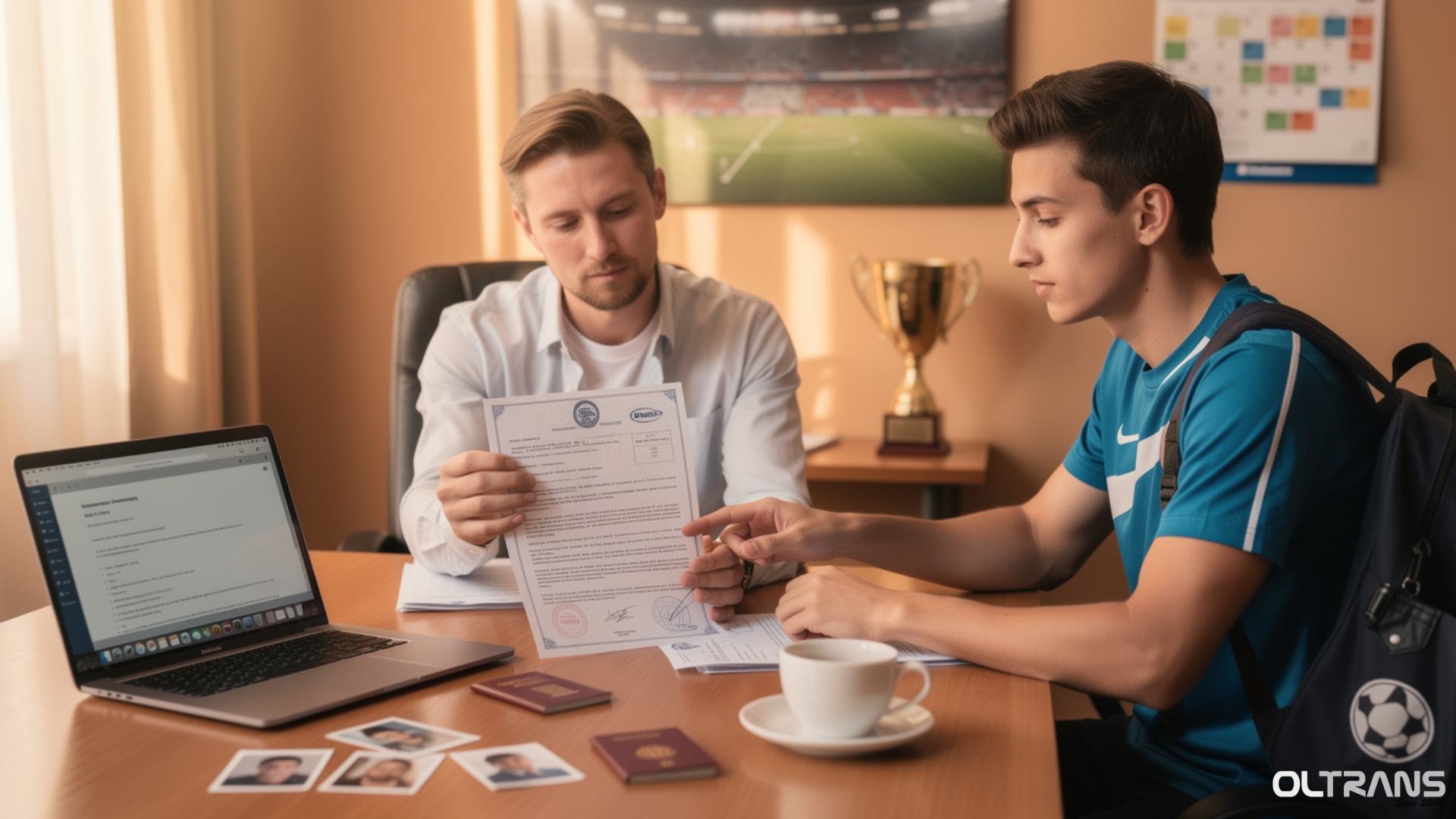
Sport has long since crossed national borders and become a truly global phenomenon. More and more Bulgarian athletes are competing internationally or signing contracts with foreign clubs, while foreign players are joining Bulgarian teams to build their careers. Behind every transfer or competition entry, however, lies not only athletic preparation but also extensive administrative and legal work.
Documents proving eligibility, contractual relations, medical fitness or transfer authorisation form the foundation of every sporting career. These must be recognised by foreign clubs, federations and institutions so that athletes can exercise their rights without obstacles. This is why translation and legalisation are essential – they ensure that documents carry legal weight abroad and are accepted by the relevant authorities.
This article explores which sports documents require translation and legalisation, why the procedures are mandatory, how the process works, and how to avoid the most common problems in international transfers and competitions.
Which documents require translation and legalisation in sports competitions and transfers?
International sporting rules and contracts demand clear and official documentation. Every transfer or competition entry is accompanied by a number of documents that must be translated and legalised in order to be accepted by foreign clubs, federations and institutions.
First are contracts between clubs and athletes – employment or service contracts regulating terms of participation, remuneration, duration and termination clauses. As legally binding documents, they must be translated with the utmost accuracy and officially certified.
Equally important are certificates of sporting eligibility, required by national and international federations as proof that the athlete is entitled to compete in a given discipline. These are often accompanied by medical records – health certificates, test results or reports – ensuring the athlete’s safety.
A particularly significant document is the International Transfer Certificate (ITC), widely used in football, basketball and other team sports. Without it, the transfer cannot be completed and the athlete cannot represent their new club.
Finally, there are documents issued by sports federations and associations, such as licences, tournament participation permits or disciplinary rulings. These too must be officially translated and legalised in order to be valid abroad.
Together, these documents form the basis of a sporting career, and their proper translation and legalisation are the key to smooth participation and successful transfers.
Why are translation and legalisation mandatory in sport?
In professional sport, documents are not mere formalities – they guarantee compliance with international rules and protect the rights of athletes and clubs. Without translation and legalisation, no contract, licence or transfer certificate issued abroad has legal force in Bulgaria. The reverse is also true: Bulgarian documents without these procedures cannot be used abroad.
Translation is essential to make the content fully understandable and correctly interpreted by foreign authorities. Sports contracts contain specific terms – clauses on transfer fees, conditions of participation, disciplinary provisions – all of which must be translated with absolute precision. Even a small error may lead to misinterpretation and disputes.
Legalisation confirms the authenticity and official nature of the document. International federations, sports courts and clubs accept only documents bearing proof of validity – either via Apostille (for Hague Convention countries) or consular legalisation (for non-members).
Without these two steps, an athlete or club risks having a transfer delayed or blocked, or being refused the right to compete internationally.
The legalisation procedure – Apostille or consular certification
Legalisation is the official process confirming that a document issued in one country is valid in another. In sport this is crucial, as transfers and competition entries often depend on the timely submission of properly certified documents.
In Hague Convention countries, documents are legalised with an Apostille – a special stamp or sticker issued by a competent authority (such as the Ministry of Justice or Ministry of Foreign Affairs). The Apostille certifies the authenticity of signatures and seals, greatly facilitating their use abroad.
If the document comes from a country not party to the Hague Convention, consular legalisation is required. In such cases, the document must first be certified by the Ministry of Foreign Affairs of the issuing country and then verified by the Bulgarian embassy or consulate there. Only then can it be officially used in Bulgaria.
The process usually involves several steps:
- Issue of the document by the competent authority (e.g. sports federation or medical body).
- Apostille or consular certification, depending on the country.
- Where required – verification by the Bulgarian Ministry of Foreign Affairs.
- Translation into Bulgarian by a sworn translator.
- Certification of the translation so that it acquires official status.
Within the EU, procedures are generally simpler and faster. Outside the EU, however, legalisation may take longer and cost more, making early preparation especially important.
Which institutions and organisations require translated and legalised sports documents?
In sport, different organisations and authorities may demand officially translated and legalised documents in order to recognise athletes’ rights and validate transfers. The most common include:
- International sports federations – such as FIFA, UEFA, FIBA, IAAF and others, which regulate participation in international tournaments and transfers. They accept only documents translated and certified according to official requirements.
- National sports federations – in Bulgaria or abroad, issuing licences, competition permits and transfer confirmations.
- The Court of Arbitration for Sport (CAS) – based in Lausanne, handling disputes between clubs, athletes and federations. In CAS proceedings, all documents must be submitted in the official languages and have full legal validity through translation and legalisation.
- Sports clubs and agents – when signing contracts, transfer agreements or medical certificates, clubs require sworn translations recognised by institutions.
- Notaries and public authorities – for powers of attorney, declarations or certificates linked to transfers, official translation and legalisation may also be required for legal force.
The principle is clear: in international sport, only properly translated and legalised documents are accepted.
Common problems and how to avoid them
Despite the clear rules, in practice translation and legalisation of sports documents often face difficulties that may delay or even jeopardise a transfer or competition entry.
One frequent issue is the absence of an Apostille or consular certification. Documents issued abroad but not legalised according to the country’s rules have no legal value in Bulgaria and may be rejected by clubs or federations.
Another serious risk is inaccurate translation. In sports contracts and transfer certificates, every clause matters. Incorrectly translated terms can alter meaning and lead to financial disputes or disciplinary sanctions.
Differences in requirements between countries and federations also cause confusion. One federation may demand notarised documents, while another accepts only Apostille. This inconsistency often delays athletes and clubs.
Delays are another common problem, especially in translation and legalisation. Sports transfers are bound by strict deadlines – the so-called “transfer windows”. Even minor delays in document preparation may prevent the transfer and leave the athlete unable to compete.
These risks show that without professional handling and thorough preparation, the chance of error is high. The solution is to entrust the process to experienced translators and specialists familiar with sporting procedures.
Practical advice and checklist
For transfers or participation in international competitions to proceed smoothly, athletes and clubs must be well prepared administratively. Here are some practical tips:
Check documents in advance. Make sure contracts, certificates and medical records are complete, signed and sealed by the relevant authorities.
Identify the type of legalisation required. If the country is a Hague Convention member, an Apostille is needed. Otherwise, consular legalisation applies, usually taking longer.
Use sworn translators experienced in sports documentation. Sporting and legal terminology requires the highest precision to avoid misunderstandings.
Follow a checklist before submission:
- original document;
- Apostille or consular certification (if applicable);
- official translation by a sworn translator;
- certification by a translation agency or the Ministry of Foreign Affairs;
- validity check (if specified).
Start the process early. Deadlines in sport are critical – missing a transfer window or registration deadline can have serious consequences.
Keep copies of all documents. This allows quick responses if a federation or club requests additional submissions.
These steps significantly reduce the risk of mistakes and ensure documents are accepted without delay.
The translation and legalisation of documents for sports competitions and transfers are mandatory steps to ensure your paperwork is recognised and accepted by international federations, clubs and institutions. Without properly prepared contracts, transfer certificates or medical records, the process may be delayed or even blocked.
Within the European Union, procedures are easier thanks to Apostille and harmonised regulations, while outside the EU full consular legalisation is often required. Early preparation is therefore crucial for successful transfers and competition entries.
The most common mistakes – missing Apostilles, inaccurate translations or incomplete sets of documents – can lead to refusal by the authorities. To avoid such problems, it is best to rely on professionals familiar with both sporting and legal terminology, as well as international requirements.
This is where Oltrans comes in – a company with many years of experience in the translation and legalisation of official documents, including sports contracts and certificates. Our team offers:
- sworn translations into multiple languages, tailored to federation and club requirements;
- full organisation of the process – from Apostille to final certification;
- support under tight deadlines and in line with the specific demands of international institutions.
If you are about to undergo a transfer or compete internationally and want your documents accepted without issues, trust Oltrans. With our help, you can complete the process quickly, securely and without unnecessary stress – allowing you to focus on what matters most: sporting success.