Does a Foreign Diploma Need to Be Legalised?
Does a Foreign Diploma Need to Be Legalised?

Legalising a diploma from abroad can seem like a complicated process, especially if you’re unfamiliar with the requirements of the country where it will be used. Diplomas serve as proof of your education, qualifications, and achievements. However, in order for a diploma obtained in one country to be recognised in another, it often must go through a process of legalisation. This is necessary to ensure that the document is valid and accepted by foreign institutions, whether for education, employment, or legal purposes.
In this article, we’ll explore why and when a foreign diploma needs to be legalised, the steps involved in the legalisation process, the potential challenges, and what needs to be done to make sure your diploma is accepted abroad.
What Does Legalisation of a Diploma Mean?
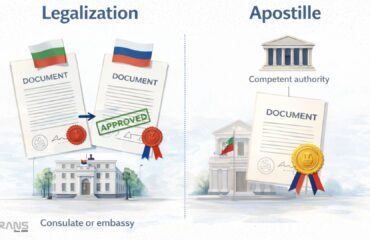
Legalisation is the process by which the authenticity of documents, including diplomas issued outside the country, is certified. This procedure is necessary to ensure that the document is valid for use in a foreign country. Legalisation not only certifies that the document has been signed by an authorised body but also confirms that all signatures and stamps are genuine and legitimate. This process is particularly important for documents that will be presented to institutions or authorities requiring proof of authenticity for the submitted documents.
Why Should a Diploma Be Legalised?
The legalisation of a diploma from abroad is important because it serves as a guarantee that the document will be recognised in the country of use, whether for administrative, educational, or legal purposes. When presenting a foreign diploma to institutions, such as government authorities, employers, or universities, they need assurance that the document is legitimate and can be used as proof of completed education or qualifications. Legalisation ensures that the document is valid and officially recognised internationally.
When is Diploma Legalisation Necessary?
The legalisation of a foreign diploma becomes necessary in various situations where official recognition of your education is required in the country of intended use. Some common scenarios where diploma legalisation is required include:
Applying for Higher Education or Further Studies: If you are applying to universities or academic institutions for further studies, such as master’s or doctoral programs, your foreign diploma will need to be legalised to confirm its authenticity and equivalence to the country’s educational standards.
Employment in Regulated Professions: Many regulated professions, such as law, medicine, and engineering, require a legalised diploma to ensure that the foreign qualifications meet the required standards for practicing within the country.
Immigration and Work Visa Applications: When applying for visas, especially work visas, you may be asked to provide a legalised diploma to confirm your qualifications to potential employers or immigration authorities.
Recognition by Government Authorities: In some countries, government authorities may require the legalisation of foreign educational documents for official purposes, including for civil service positions or for any state-backed initiatives.
International Business Transactions: For foreign professionals or organisations wishing to establish business in another country, legalizing their qualifications can be a requirement for recognition and registration within the professional or commercial system.
In all these cases, the process of legalisation ensures that the foreign diploma will be accepted as valid by the authorities or institutions of the receiving country.
What Documents are Needed for Legalisation?
To legalise a diploma, the following documents are generally required:
Original Diploma and Notarised Copy: You will need to present the original diploma, along with a notarized copy. The notarised copy confirms that the original document is authentic, and it will be the one that gets legalised.
Translation of the Diploma into the Required Language: If necessary, a certified translation of the diploma into the required language (in some cases, the official language of the country where the diploma is being used) must be provided. The translation must be done by a licensed translator, and it should be an accurate and complete reflection of the original document.
Identity Document: You will need to present a valid identity document (such as a passport or national ID) to confirm your identity during the process.
Steps for Legalising a Diploma
The process of legalising a diploma from abroad involves several key stages. While the procedure may vary depending on the country where the diploma was issued, the following are the basic steps:
Verification of the Original Document:
Before initiating the legalisation process, the original diploma must be verified to ensure it is authentic. In most cases, this involves obtaining a notarised copy of the original document, which verifies that the copy is an exact replica of the original. The notarised copy serves as the document to be legalised.
Certified Translation:
If required by the country in which the diploma will be used, a certified translation must be made. The translation should be completed by a licensed translator and should match the content of the original diploma. Depending on the requirements, the translation may also need to be notarised. This ensures the accuracy and legitimacy of the translated document.
Legalisation by the Relevant Authority:
Once you have the notarised copy and translation (if necessary), the next step is to submit the documents for legalisation. This typically involves presenting them to the appropriate government body, such as a Ministry of Foreign Affairs or an embassy. The relevant authority will verify the authenticity of the document and its translation, then apply the necessary legal validation.
Obtaining the Apostille or Consular Legalisation:
If the country where the diploma is to be used is a signatory of the Hague Convention, the next step is to apply for an apostille. This is a stamp or certificate applied to the document to verify its authenticity. For countries that are not signatories to the Hague Convention, consular legalisation will be required instead, which may involve further verification by the respective consulate or embassy.
Submission to the Foreign Institution:
Once the legalisation process is complete, the document is ready to be submitted to the relevant foreign institution. Depending on the purpose, this could be an educational institution, employer, or government authority, which will now recognise the document as valid for legal, academic, or professional purposes.
Each of these steps ensures that the diploma will be recognized abroad, whether for academic recognition, employment opportunities, or immigration procedures. It’s important to carefully follow the procedure to avoid delays or complications in the legalisation process.
Common Problems in the Legalisation of Foreign Diplomas
The process of legalising a diploma from abroad can often involve certain challenges. Here are some of the most common issues that individuals may encounter during the legalisation procedure:
Incorrect or Incomplete Documents:
One of the most frequent problems arises when the documents submitted for legalisation are incomplete or contain errors. This could involve missing pages, incorrect details, or illegible signatures and stamps. For example, if a diploma does not contain the necessary signatures from the educational institution or lacks the official seal, it may be rejected during the legalisation process. Additionally, some institutions may require extra documents such as proof of identity or academic transcripts, and failing to submit these can delay or halt the process.
Incorrect Translation:
Translations are a critical part of the legalisation process. If the translation of the diploma is inaccurate or not performed by a certified translator, it can lead to the rejection of the document for legalisation. To avoid this, it is essential to ensure that the translation is not only accurate but also done by an accredited professional. Many countries require a certified translation, which verifies the authenticity of the translation relative to the original document.
Notarisation Issues:
In cases where a notarised copy of the diploma is required, issues can arise if the notarization is not done correctly. Notarisation ensures that a copy of the original document is genuine and matches the original. However, if the notarisation is not performed by an authorized notary or if the document is not properly signed and stamped, it could be rejected by the authority responsible for legalisation
Country-Specific Legalisation Requirements:
Different countries have varying rules regarding the legalization of foreign documents. Some countries may require additional legalisations or certifications, such as consular legalization, even if an apostille has already been issued. Not being familiar with these requirements can lead to confusion or delays. For example, some countries may only accept documents with an apostille, while others may require consular legalisation in addition to the apostille.
Delays Due to Administrative Backlog:
Legalisation processes can sometimes take longer than expected due to administrative backlogs, especially in busy periods or when many applications are submitted at once. Processing times can vary depending on the specific authority responsible for legalisation, and some documents may be delayed due to high volumes of requests. Additionally, delays in the mail or courier services can impact the overall timeline, especially when documents are sent from abroad.
Mismatch Between Name or Information:
A mismatch in names, dates of birth, or other personal information between the diploma and the supporting identification documents (e.g., passport or ID card) can cause problems. This may raise questions about the authenticity of the diploma, leading to delays in verification or rejection of the document for legalisation.
How to Avoid These Problems
- Double-Check the Documents:
Always ensure that all required documents are complete and correct before submitting them for legalisation. Carefully check for any missing pages or incorrect information on the diploma and other accompanying documents.
- Use Certified Translators:
When translating your diploma, make sure you use a certified translator or translation agency that is recognised by the relevant authorities. It’s crucial to ensure the translation is accurate and conforms to the requirements of the institution where the diploma will be used.
- Ensure Proper Notarization:
Before submitting the diploma for legalisation, make sure it is notarised by a qualified notary public. Confirm that the notary has stamped and signed the document correctly, and that it meets the necessary legal standards.
- Understand the Legalisation Requirements:
Familiarise yourself with the specific legalisation requirements of the country where you intend to use the diploma. This may include determining whether you need an apostille, consular legalisation, or both, and knowing the specific authority responsible for each step.
- Plan for Potential Delays:
Understand that the legalisation process may take time and plan accordingly. It’s a good idea to start the process well in advance of any deadlines, such as job applications, academic programs, or immigration procedures.
By following these recommendations, you can reduce the chances of encountering issues during the legalisation process and ensure that your foreign diploma will be properly recognized for use abroad.
The legalisation of your diploma is a critical step to ensure its recognition , whether it’s for employment, education, or legal procedures. The process involves careful preparation, from notarised copies and translations to placing an apostille and obtaining consular legalisation when required.
Don’t risk mistakes or delays when preparing your diploma for legalisation. Contact our specialists today to ensure a smooth and timely completion of the process.