Translation and Legalization of Certificates of Quality and Conformity of Goods
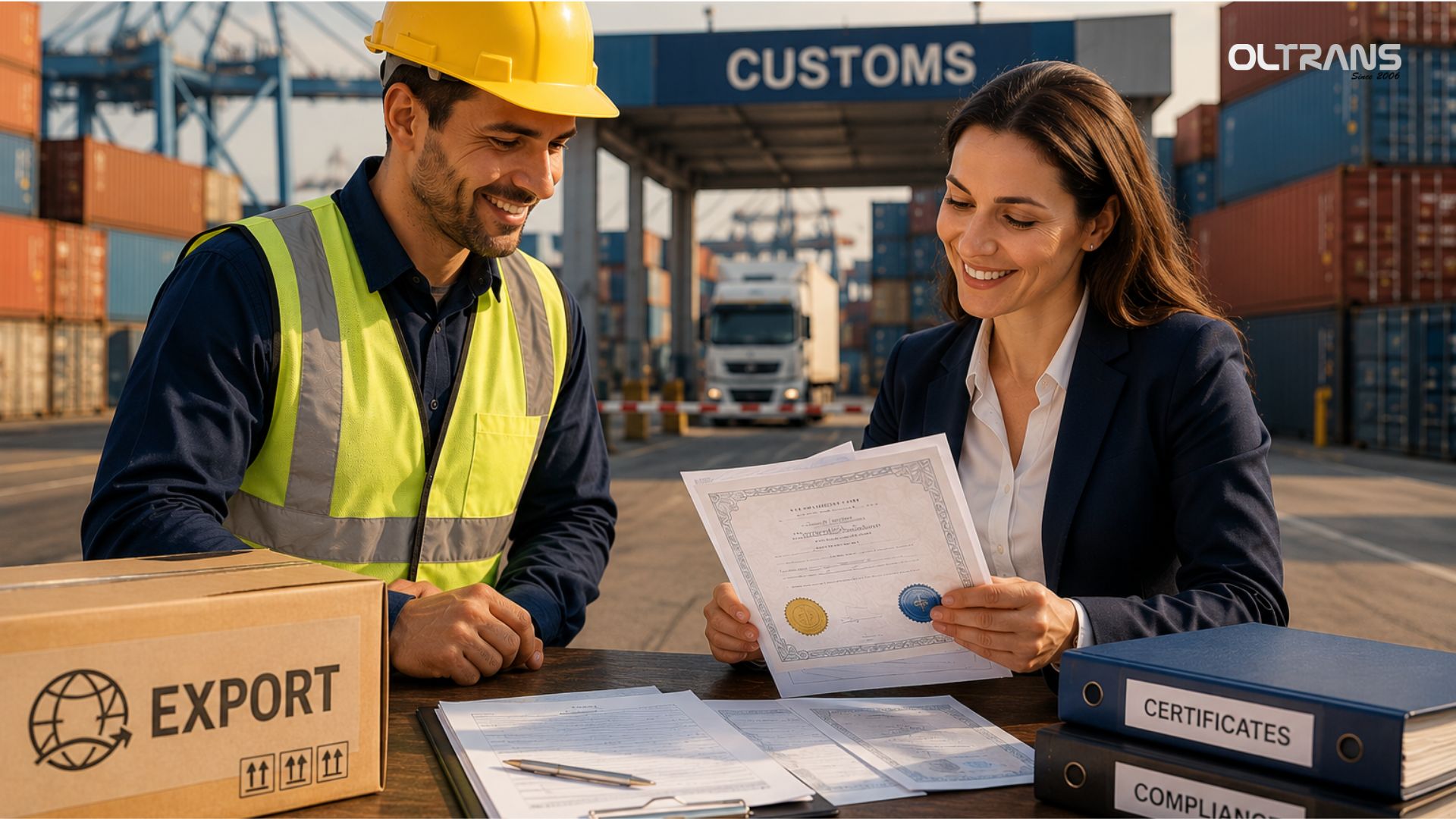
The translation and legalization of certificates of quality and conformity are critical processes for many companies and institutions involved in international trade or providing products subject to strict regulations. These documents verify that goods meet specific standards for safety, quality, and environmental compliance, which may vary depending on the country or region in which they are offered.
The translation of these documents is particularly important as it ensures that the information is understandable to all relevant parties, including customs authorities, traders, and regulatory institutions. Legalization, on the other hand, verifies the authenticity of the document and grants it legal validity in an international context.
What Are Certificates of Quality and Conformity?
Certificates of quality and conformity are official documents that confirm that products meet certain requirements and standards. They play a vital role in global trade by providing confidence to traders, customs authorities, and end-users that the goods are safe, of good quality, and comply with regulatory requirements.
Difference Between “Quality” and “Conformity”
- Quality: Refers to the characteristics of a product that make it suitable for its intended use. For example, the quality of a food product may include safety, nutritional value, shelf life, and other product-related aspects.
- Conformity: Refers to the fact that the product complies with specific legal or regulatory requirements. This may include adherence to safety standards, environmental compliance, or specific certifications imposed by countries or international organizations.
Examples of Certificates
There are various types of certificates of quality and conformity that may be required depending on the type of product and its market. Some of the most common include:
- ISO Certificates (e.g. ISO 9001)
A quality management certificate that confirms that the processes within an organization comply with international quality standards. - CE Marking and Declaration of Conformity
These documents confirm that a product meets the relevant European safety and health standards. - Certificates from Testing Laboratories
These documents confirm that the product has passed the relevant laboratory tests and is approved for use. - Test Protocols
Documents containing the results of laboratory tests and examinations of goods. - Factory Certificates
Issued by the manufacturers of goods, these certificates guarantee that the products meet certain production standards and requirements.
These certificates are often required to be presented to customs and regulatory authorities, and sometimes to business partners, to ensure that the goods can be sold in specific markets.
When Are These Documents Required?
Certificates of quality and conformity are required in various situations when goods move through customs, are sold on international markets, or are used in specific commercial and regulatory contexts. The translation and legalization of these documents are necessary to ensure their recognition and validity in the relevant country.
- Import/Export and Customs Procedures
When goods pass through customs, it is very likely that certificates of quality and conformity will be required. This is especially true for goods that may pose a risk to health, safety, or the environment, such as food products, pharmaceuticals, chemicals, and electronic devices. Customs authorities often require these documents to ensure that the goods meet national or international standards before being released onto the market.
- Public Procurement and Sale to Retail Chains
Many organizations and retail chains that purchase goods in large volumes require certificates of quality and conformity to ensure that the products meet established standards. They may request documents confirming compliance with specific safety, environmental, or manufacturing process requirements. For example, public institutions and companies involved in public procurement frequently require such documents to ensure the quality and safety of the goods they purchase.
- Audits by Clients and Regulatory Authorities
Many companies and institutions conduct regular audits and inspections of their suppliers to verify that they are complying with the relevant standards and laws. In these cases, updated certificates of quality and conformity may be requested. These documents can be requested both during scheduled audits and in the event of inspections or complaints from consumers or regulatory authorities.
- Sales via E-commerce Platforms
When selling goods online through platforms like Amazon, eBay, or other international e-commerce sites, it is often required to present certificates of conformity and quality. This is particularly true for products in highly regulated categories such as electronics, toys, cosmetics, or dietary supplements. Platforms have their own requirements to ensure the safety of the products offered to their users and to avoid potential legal consequences.
What Do Translation and Legalization Mean in Practice?
The translation and legalization of certificates of quality and conformity are not just technical steps — they are important legal processes that ensure that the documents will be recognized and valid in a foreign jurisdiction. These two stages are not only important for compliance with legal requirements but also for facilitating trade processes, including customs clearance and international market sales.
- Official Translation / Sworn Translator
When it comes to translating certificates, it is crucial that the translation is done by a sworn translator. Sworn translators are authorized to translate official documents that have legal value, and their work is certified with a signature and seal. These translations are vital as they guarantee that the content of the document is accurate and corresponds to the original.
The translation must be highly precise, especially when dealing with technical terms and specific language related to the relevant standards and requirements. Translators specializing in this field must have in-depth knowledge of the subject and terminology to ensure the accuracy of the translations.
- Notarial Certification of Signature/Copy
Once the translation is completed, in some cases, it is necessary to notaries the translator’s signature. This means that a notary public certifies that the translation was done by an authorized translator and that the document has been accurately translated.
Additionally, for some documents, it is necessary to certify a copy of the original. The notary confirms the authenticity of the original document and its conformity with the copy, which may also be a requirement of various institutions.
- Apostille and When It Is Applied
An apostille is a procedure that certifies a document as official and authentic so that it will be recognized in the foreign country with which the relevant state has a contractual agreement under the Hague Convention of 1961. The apostille process is quick and simple — the document goes through a specialized government agency that affixes a seal, making it valid in other countries that have signed the Convention.
This procedure is important when goods need to be exported to a country outside the EU or when customs authorities require this type of certification.
- Consular Legalization and When It Is Necessary
Consular legalization is a process in which documents prepared for presentation in a foreign country must be certified by the diplomatic mission of the relevant country. This procedure is necessary when the country has not signed the Hague Convention and does not recognise the apostille.
Consular legalization confirms that the documents are authentic and that they can be used in the relevant jurisdiction. This process involves several steps, including the verification of the authenticity of signatures and seals, and may take more time depending on the country and specific requirements.
Step-by-Step Process
- Checking the Requirements (Country, Institution, Client)
The first step is to check the specific requirements of the country or institution where the certificate will be used. This includes:
- What certificates and documents are required?
- Is an apostille or consular legalization needed?
- What are the specific translation requirements (for example, whether a sworn translator is required, or if notarial certification is needed)?
These requirements often vary depending on the country, regulatory institution, or even the client. It is crucial to check these details to avoid delays or additional costs.
- Preparing the Original Documents (Paper or Electronic)
Once the requirements have been established, the original documents that will be translated and legalized must be prepared. This can be:
- Paper original: This may be a certificate issued by a laboratory, accredited body, or manufacturer.
- Electronic original: In some cases, an electronic certificate may be required, which is only valid if signed with an electronic signature and has the necessary certification.
It is important to ensure that all original documents are in the correct format and available for the next steps.
- Notarial Certification/Apostille (If Necessary)
Depending on the country or institution, it may be necessary to have the original certificate notarialлъ certified or to apply an apostille.
- If an apostille is required, the document is processed by the relevant Ministry of Justice or another accredited authority.
- If notarial certification is needed, a notary public certifies the authenticity of the signature or copy.
These processes certify that the document is official and suitable for use in a foreign jurisdiction.
- Official Translation with Seal/Certificate of Accuracy
Once the document has passed the necessary certifications, it must be translated by a sworn translator. The translation should be accurate and complete, maintaining the original terminology and structure.
After the translation, the sworn translator will sign and seal the translated document, certifying that the translation is correct. A certificate of accuracy for the translation may also be issued, which is necessary for official documents.
- Delivery and Acceptance (Paper/Electronic)
The final step in the process is delivering the completed documents to the relevant client or institution. This may involve delivering paper copies if the original is required, or electronic delivery if the documents have been accepted in digital form.
Frequently Asked Questions (FAQ)
Is an apostille required if the document is from the EU?
Within the European Union, documents issued by official authorities from one of the member states do not require an apostille, as the EU has specific regulations for mutual recognition of documents. However, if the document needs to be used in a third country outside the EU, an apostille or consular legalization may be required.
Are electronic certificates acceptable?
Yes, electronic certificates are increasingly accepted, especially in the digital age. However, it is important to ensure that they are signed with a qualified electronic signature and can be validated through the appropriate verification platforms. For some countries, a paper version or consular certification may still be required.
How long does it take, and is there an expedited option?
The time required for the translation and legalization of a certificate depends on many factors, such as the type of document, certification requirements, and the legalization process itself. Generally, this may take between several days and a week, depending on the situation. In some cases, expedited services are available.
Which originals are mandatory?
Usually, it is necessary to present the original certificate, along with a copy. In some cases, a copy alone may be sufficient, but if notarial certification or an apostille is required, the original document must be provided. For electronic certificates, a copy with an electronic signature may be requested.
What if the certificate is expired or invalid?
If the certificate is expired or invalid, you will need to contact the issuing authority or laboratory to obtain a new or updated certificate. For documents that need to be legalized, it is important to ensure that the updated version is presented to avoid delays or refusals.
Does the certification need to be done for each document in the package?
Yes, every document in the package must be legalized if required by the regulatory authorities. Depending on the requirements, each component of the documentation may need translation, certification, or an apostille to be recognized by the authorities in the destination country.
What are the consequences of incomplete or inaccurate documentation?
If the documentation does not meet the requirements or is incomplete, this may lead to delays in customs procedures, rejection of certificates, or even refusal of the goods for sale in the specified country. To avoid such problems, it is important to ensure that all documents are correctly completed and legalized.
How “Oltrans” Helps
Oltrans is a reliable partner for any company or institution that requires professional services for the translation and legalization of certificates of quality and conformity. Our services ensure the smooth and timely completion of all steps in the process, guaranteeing that your documents will be properly handled and recognized by all regulatory authorities.
Consultation on Requirements for a Specific Country/Institution
Before we begin with translation and legalization, our experts will provide you with a free consultation regarding the requirements for each specific country or institution. We will inform you about the necessary documents, whether an apostille or consular legalization is required, and the timelines and costs involved in the process.
Specialist Translation, Internal Terminology Database, and Editing
Our translators are specialists in specific areas, such as goods quality and conformity, certification, and standardization. We have an internal terminology database that ensures that every technical and legal term is translated accurately and correctly. After the translation, the document undergoes additional editing to ensure that all requirements are met.
Organization of Certification, Apostille, and Consular Legalization
Oltrans offers a full range of document certification services, including:
- Notarial certification of signatures and document copies.
- Apostille for international validity of certificates, if required.
- Consular legalization for documents to be used in countries outside the European Union.
We will handle all the necessary steps to ensure that the document is valid in the respective jurisdiction.
Proper translation and legalization of certificates of quality and conformity are essential for successful trade and entry into international markets. The process requires precision, attention to detail, and knowledge of the specific requirements of different countries and institutions.
Oltrans is your trusted partner in this process. With our experience and professionalism, we will take care of all the steps to ensure that your documents are recognized worldwide. We are here to simplify your business operations and provide peace of mind by handling the legalization and translation of your certificates.