What to Do If Your Document Comes from a Non-Hague Convention Country?
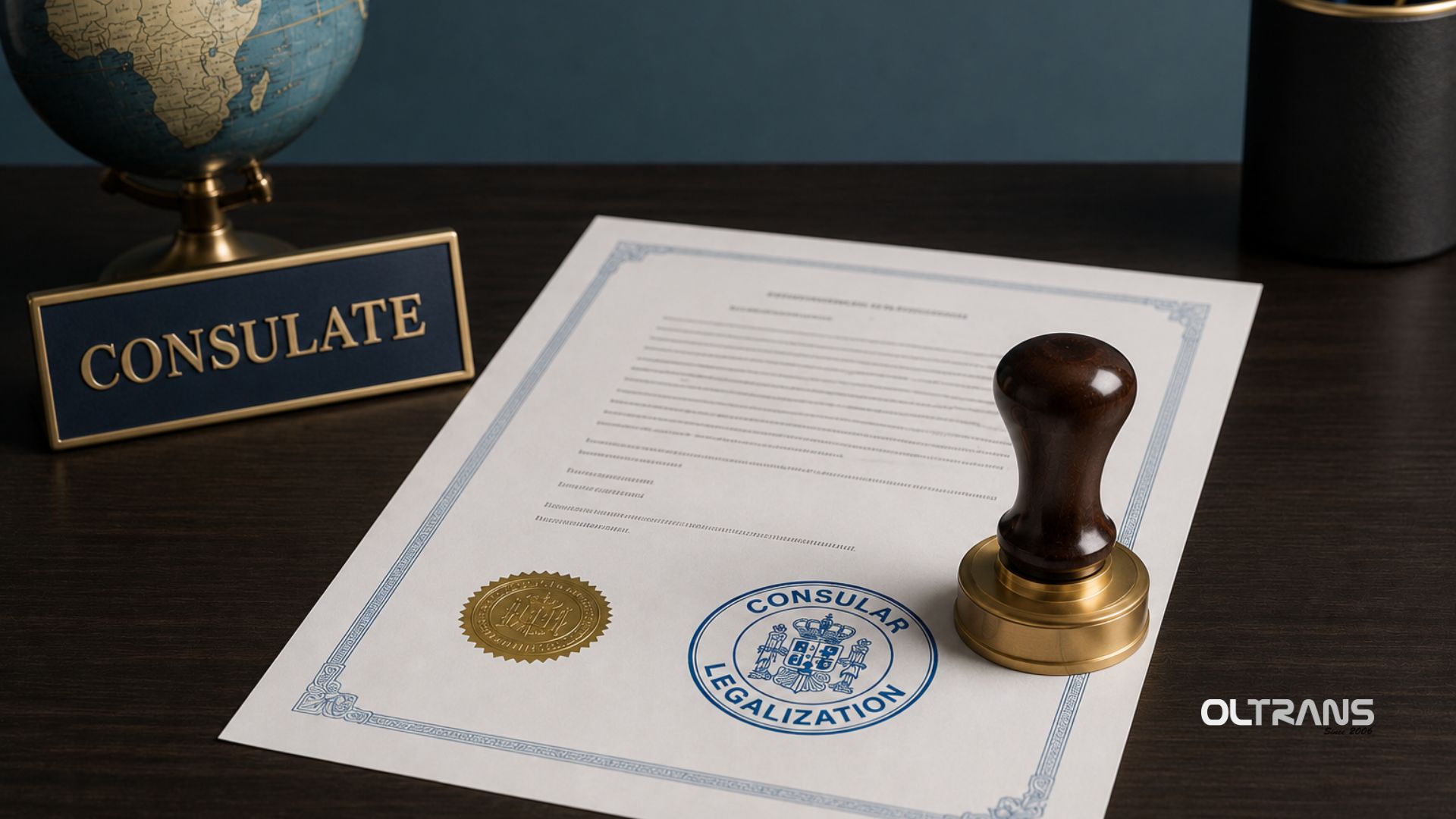
When you need to use a document abroad—such as a birth certificate, diploma, power of attorney, court decision, or commercial document—the first question is how it can be officially recognized by the authorities in the other country. In countries that are party to the 1961 Hague Convention, the solution is usually an apostille: a one-step certification by a competent authority. But if the document was issued in a non-Hague country, the rules differ and the process involves consular legalization—a sequence of certifications by several institutions.
This article aims to guide you through the key concepts and practical steps in clear, neutral, international English—no legalese. We explain what “non-Hague Convention country” means, how apostille and consular legalization differ, which authorities are involved, and how to plan the process to avoid delays and extra costs. We’ll cover common document types (personal, educational, and corporate), requirements for official translations, and practical considerations for individuals, students, professionals, and companies operating across borders.
You’ll also find a structured comparison of apostille vs. consular legalization (in table form) so you can see at a glance what to expect in terms of time, cost, and complexity. We also highlight frequent pitfalls—such as incorrect formats, missing signatures/stamps, expired validity, or inconsistent personal data—and how prevention can save you weeks.
Whether you are relocating for work or study, expanding a business, getting married, or dealing with inheritance matters, proper legalization is critical for international recognition of your documents. The sections that follow provide a clear roadmap: from definitions, authorities, and the detailed process to comparisons, common hurdles, and proven practices. Our goal is to give you a practical guide you can follow confidently—regardless of the issuing country and the country where the document will be used.
What Does “Non-Hague Convention Country” Mean?
The Hague Convention of 5 October 1961—officially the Convention Abolishing the Requirement of Legalization for Foreign Public Documents—facilitates cross-border use of documents. By introducing the apostille (a special stamp or sticker), member states mutually recognize authenticated documents without further consular certifications.
If a country is not a party to the Convention, it falls into the non-Hague category. This means the apostille is not sufficient or does not apply at all. Instead, a more complex consular legalization procedure is required.
Implications for individuals and businesses
- More administrative steps — the document must pass through several institutions before it’s accepted abroad.
- Longer timelines — instead of days, the process can take weeks or months.
- Higher costs — multiple authorities may charge fees, including the destination country’s consulate.
- Limited validity — some countries set time limits after which documents must be legalized again.
- Divergent rules — each non-Hague country may impose specific requirements (extra signatures, seals, or even court verification).
Examples of non-Hague Convention countries
Most countries today are members, yet there are still states that do not apply the apostille. These include certain countries in Africa, the Middle East, and Asia. For individuals and businesses connected with these regions, careful planning of the legalization process is especially important.
Standard Procedure for Document Legalization
If a document is issued in a country not party to the Hague Convention, consular legalization is required for it to be recognized elsewhere. This is a multi-stage process through which competent authorities confirm the authenticity of the signature, seal, and the capacity of the signatory official.
Apostille vs. consular legalization
- Apostille — a single certification by a competent authority in the issuing country.
- Consular legalization — several consecutive certifications: first by the issuing/local authority, then by the Ministry of Foreign Affairs (MFA), and finally by the embassy/consulate of the destination country.
In other words, an apostille is one-step, whereas consular legalization is multi-step and more complex.
Key steps in the standard process
- Document preparation — original or notarized copy.
- Verification by the competent local authority — e.g., municipality, university, or chamber of commerce.
- Ministry of Foreign Affairs (MFA) — authenticates the signature and seal of the preceding authority.
- Embassy or Consulate of the destination country — final certification making the document valid in that jurisdiction.
- Translation and certification of the translation — in many cases the document must be translated into the official language of the destination country and the translation notarized or officially certified.
Timing and complexity
Timelines vary by country and document type:
- A few weeks for standard civil status records;
- Several months for court or commercial documents involving more authorities.
Experts recommend starting well before your deadline, especially for study, work, or business use.
Examples of Documents That Typically Require Legalization
Not all documents need legalization, but when it comes to official documents issued by government bodies, schools, courts, or notaries, the process is almost always required to ensure the document will be recognized abroad as valid and authentic.
Personal documents
- Birth certificates — for child registration, proof of citizenship, or education abroad.
- Marriage certificates — for recognition of marriage or residence applications.
- Death certificates — for inheritance proceedings or transfer of assets abroad.
- Court decisions on adoption or parental rights — in cross-border cases.
Educational documents
- Diplomas and academic certificates — for recognition of education, university admission, or employment.
- Certificates of qualification or professional licensure — e.g., engineering, medical, or legal.
- Transcripts and records of achievement — for student transfers or scholarship applications.
Commercial and corporate documents
- Powers of attorney — used in business transactions, banking, or representation before authorities.
- Articles of association, bylaws, and corporate registrations — for opening branches or partnerships.
- Commercial contracts — especially if performed under foreign jurisdiction.
- Certificates of origin; sanitary or phytosanitary certificates — common in international trade.
Why do these documents require legalization?
Put simply: each country must be confident the document is authentic and issued by a legitimate authority. Legalization acts as a trust bridge between legal systems and protects citizens and businesses from fraud.
Institutions Involved in the Process
Legalizing documents from non-Hague countries involves several institutions, each with a specific role. At each stage the document is certified until it becomes fit for use abroad.
Issuing or competent local authority
Typically the first step is the authority that issued the document or can confirm its authenticity:
- Municipalities — civil status records.
- Universities and educational institutions — diplomas and transcripts.
- Notaries — powers of attorney and certified copies.
- Chambers of commerce — corporate documents and certificates of origin.
Ministry of Foreign Affairs (MFA)
The MFA is central to the process. It verifies that the signature and seal of the preceding institution are authentic and certifies the document with its stamp or sticker. This is a mandatory stage in most non-Hague countries.
Embassy or Consulate of the destination country
The next step is legalization at the embassy or consulate of the country where the document will be used. This is the final confirmation that the document is compliant and may have legal effect in that foreign jurisdiction.
Notaries and certified translators
In some cases the document must be translated into the official language of the destination country. Translations are often performed by sworn/certified translators and notarized. This ensures the content is accurate and understandable to the foreign authorities.
Private intermediaries and agencies
While not government bodies, legalization agencies and specialist firms can be very helpful. They know the procedures, save time, and minimize the risk of errors—especially for countries with complex or highly specific requirements.
Detailed Legalization Process for Non-Hague Countries
The process may seem complex, but it follows a clear sequence. It’s essential to observe the correct order—skipping or mishandling a step can mean starting over.
Document preparation
- Ensure you have the original or a notarized copy.
- Check that it was issued by a competent authority and contains all required signatures and seals.
Verification by the competent local authority
- The document is first confirmed by the issuing body or the relevant institution (university, municipality, chamber of commerce).
- This proves the document is authentic.
Authentication by the Ministry of Foreign Affairs
- The MFA authenticates the signature and seal of the preceding authority.
- Practically, this is a key stage that gives the document an official international status.
Legalization at the Embassy or Consulate
- The document is presented to the embassy/consulate of the country where it will be used.
- The final certification there makes it valid in the destination country.
Translation and certification of the translation (if required)
- In most cases the document must be translated into the official language of the destination country.
- The translation is done by a sworn/certified translator and is often notarized or certified by a specialized agency.
Important: Some countries require additional steps—e.g., verification by courts or specialized ministries (education, health, trade). Always check the current requirements before you start.
Comparison: Apostille vs. Consular Legalization
To help you navigate the differences, here’s a side-by-side comparison:
| Criterion | Apostille (Hague members) | Consular legalizations (non-Hague countries) |
| Procedure | Single certification by a competent authority | Multi-stage process (local authority → MFA → consulate) |
| Time | Usually a few days | From weeks to months |
| Cost | Lower (one fee) | Higher (multiple fees across institutions) |
| Complexity | Fast and easy | More complex; more documents |
| Applicability | Valid in all Hague member states | Valid only for the specific country whose consulate legalized it |
Summary:
- The apostille is convenient, fast, and widely recognized among member states.
- Consular legalization is slower, more expensive, and requires careful planning—but it’s the only option when the document is issued in a non-Hague country.
Common Challenges and How to Avoid Them
Consular legalization is complex and can lead to unforeseen issues. Knowing the most common pitfalls helps save time, stress, and money.
Long processing times
- Issue: Multiple institutions may be involved, each with slow administrative procedures.
- Solution: Start preparations months in advance, especially for study or employment.
Incomplete or inaccurate information
- Issue: Missing signatures, misspelled names, or inconsistencies with other documents lead to rejection.
- Solution: Double-check details at issuance and request corrections before legalization.
Requirement for official translations
- Issue: The destination country may accept translations only from sworn/certified translators or licensed firms.
- Solution: Confirm in advance who can produce an accepted translation and whether notarization is required.
Different rules across countries
- Issue: There is no single global procedure—each non-Hague country has its own rules.
- Solution: Verify current requirements directly with the consulate or via a specialized agency before you begin.
Unexpected costs
- Issue: Fees often apply at every stage, including translation and notarization.
- Solution: Budget for all potential fees and avoid intermediaries without transparent pricing.
Most important tip: Inform yourself in advance and don’t leave preparations to the last minute. This minimizes the risk of delays and refusals.
Legalizing documents issued in non-Hague Convention countries requires careful planning, patience, and knowledge of the rules. Unlike the apostille—a quick, one-step procedure—consular legalization involves several consecutive certifications: from local authorities, through the Ministry of Foreign Affairs, to the embassy/consulate of the destination country.
We saw that legalization is most often required for personal, educational, and commercial documents, and that each step ensures authenticity and international validity. While the process is longer and more costly, it is indispensable for people and businesses operating across borders.
Key success factors:
- start the process early;
- verify the specific requirements for the destination country;
- prepare documents and translations carefully;
- seek professional assistance when needed.
Trust the Experts
If you want to save time and avoid administrative errors, consider entrusting the process to experienced specialists. Oltrans provides end-to-end services for legalization and translation of documents to and from various countries, including those outside the Hague Convention.
Contact the Oltrans team today for professional consultation and reliable support—so your documents are recognized abroad quickly and seamlessly.