What Is the Hague Apostille Convention Certification?
What Is the Hague Apostille Convention Certification?
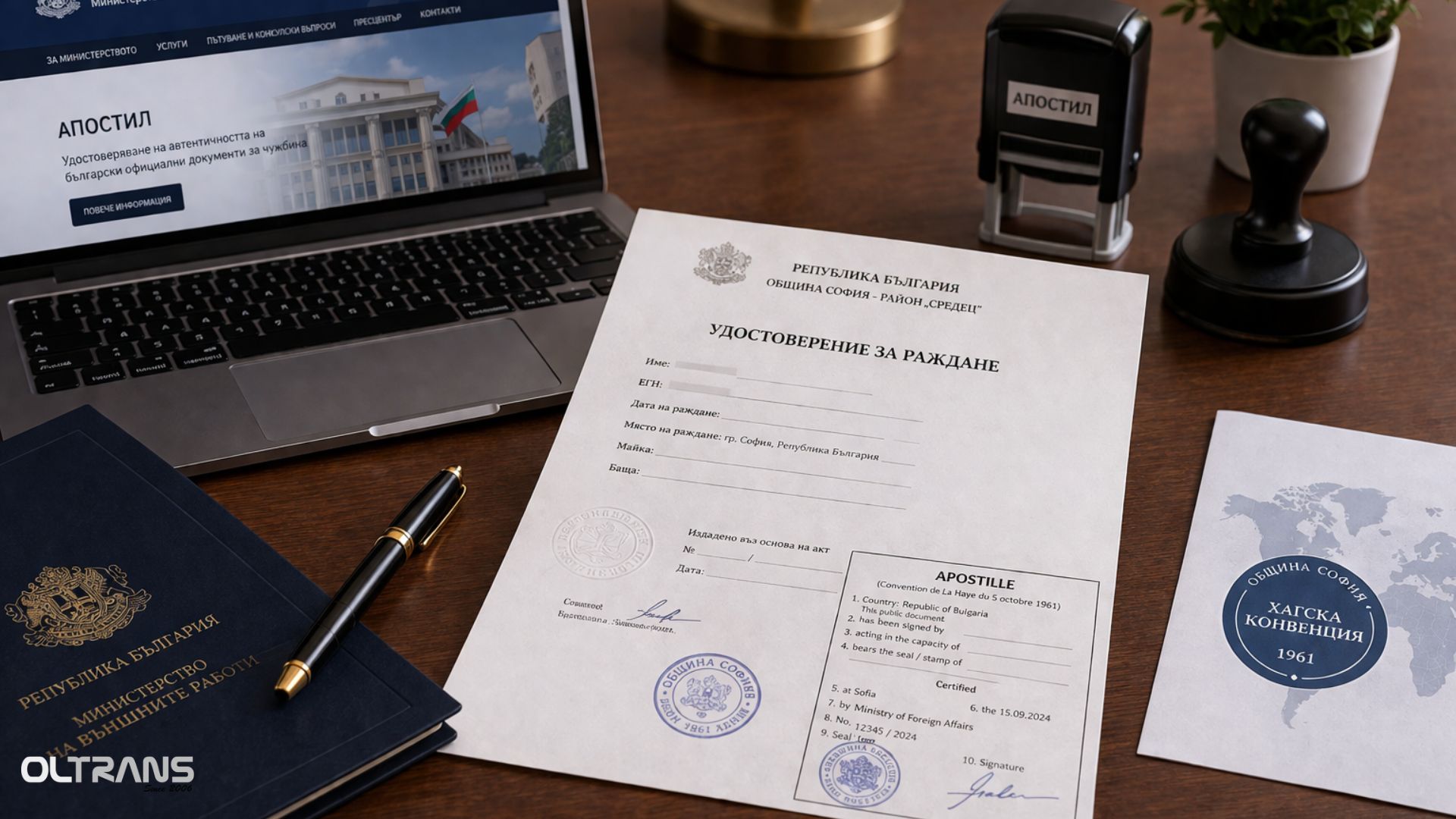
When documents issued in one country need to be used abroad, a key question often arises: how can foreign authorities recognise their authenticity? In most cases, an official certification is required to confirm that the document is genuine. One of the most widely recognised and efficient methods for international validation is the apostille – a special stamp or certificate that confirms the document is authentic and issued by a competent authority. An apostille simplifies the international use of documents, ensuring legal recognition in other countries that are members of the Hague Convention
This article provides a comprehensive explanation of what an apostille is, how the procedure is carried out, the principles of the Hague Convention, and which types of documents can be apostilled, offering practical guidance for individuals, legal professionals, and businesses alike.
What is an Apostille?
An apostille is a certificate or stamp that is affixed to an original document or attached as an addendum. It verifies the authenticity of the signatures and seals on the document, issued by a country that is a member of the Hague Convention. Documents bearing an apostille are recognised as valid in all other member countries of the Convention and do not require further legalisation.
Common examples of documents that are frequently apostilled include:
- Personal documents – birth, marriage, and death certificates; passports.
- Educational documents – diplomas, academic certificates, and professional qualification attestations.
- Legal and notarial documents – powers of attorney, contracts, and court decisions.
- Business documents – company registration certificates, commercial agreements, and authorisations for representation.
What is the Hague Convention
The Hague Convention Abolishing the Requirement of Legalisation for Foreign Public Documents is an international treaty signed on 5 October 1961, aimed at simplifying the process of international recognition of documents. The main principle of the convention is that documents issued in one member state should be recognised in other member states without the need for complex consular legalisation. Instead, a special certificate – an apostille – is attached, which certifies the authenticity of the document.
An apostille is automatically recognised in all countries that are parties to the convention, saving time, effort, and costs for additional verification.
Why is the Hague Convention Important?
Before the Hague Convention, the legalisation of documents for international use was a complex and time-consuming process, often involving multiple layers of certification. The Hague Convention significantly simplifies this procedure by introducing a uniform standard for the authentication of public documents. This facilitates the circulation of documents between member countries, reduces administrative burden, and accelerates both international business and personal transactions.
The Apostille Process
The apostille procedure is an official and strictly regulated process. Once a document has been properly prepared and all necessary signatures and stamps have been applied, it can be submitted for apostille certification. In general, the competent authority responsible for issuing an apostille depends on the type of document and the country in which it was issued. Typically, this is a government department, such as the Ministry of Foreign Affairs or an equivalent authority, which has specialised units dedicated to the international recognition of documents.
For certain types of documents, such as court decisions or notarised instruments, an apostille may also be issued by other authorised institutions, including courts or notaries. The apostille confirms the authenticity of the signature, the capacity in which the signatory has acted, and, where applicable, the authenticity of the seal or stamp on the document, ensuring it will be recognised in other member countries of the Hague Convention.
Submitting Documents for Apostille
Documents can be submitted for apostille certification in several ways, depending on the country and the issuing authority. The most common methods include in-person submission, postal services, or through specialised agencies with experience in handling international documents and familiarity with the specific requirements of different countries.
The choice of submission method generally depends on convenience, urgency, and the need for secure handling of original documents. In some countries, expedited or same-day services may be available for urgent requests, while others operate strictly within standard processing timelines. No matter the method, the goal remains the same: to ensure the document is officially certified with an apostille and legally recognised for international use.
Verification and Certification of Documents
Once a document has been submitted for apostille, it undergoes a thorough verification process to ensure its authenticity and legitimacy. This process typically involves several key steps:
- Verification of the issuing authority – The apostille certifies that the document was issued by a competent and legitimate institution. For instance, a birth certificate must be issued by the relevant civil registry, a diploma by an accredited educational institution, and a notarised deed by a licensed notary. The issuing authority’s credibility is essential, as the apostille only validates documents originating from recognised sources.
- Verification of signatures and seals – Officials carefully examine the document to confirm that signatures are genuine, seals are valid, and no unauthorised alterations have been made. The apostille is applied only to documents whose authenticity has been fully verified, ensuring that the information presented is legally sound.
- Assessment of readiness for apostille – Not all documents can be apostilled directly. In certain cases, preliminary certification, such as notarisation, is required—particularly for documents issued by private individuals or commercial entities. The notary confirms the authenticity of signatures or the legal validity of the document before it is submitted for apostille certification.
After the verification process is complete and the document’s validity is confirmed, the apostille is affixed. This can be a stamp or a certificate containing details of the issuing authority, the signature of the responsible official, and the date of certification. From this point onwards, the document gains international legal validity and can be used in countries that are members of the Hague Convention without requiring additional consular legalisation.
This comprehensive procedure ensures that documents are fully legitimate and secure for presentation to foreign institutions, whether for educational purposes, employment, business transactions, or legal proceedings. By providing this guarantee of authenticity, the apostille offers reassurance to individuals and organisations, eliminating the risk of document rejection due to doubts over its legitimacy.
Timeframes for Apostille Certification
The time required to obtain an apostille can vary significantly depending on the type of document, the issuing authority, and the current workload of the institution handling the request.
- Government authorities responsible for apostille – In most countries, a designated government body is responsible for issuing apostilles for documents intended for international use. For standard documents, the process typically takes between 3 and 7 working days. This timeframe accounts for the verification of the document’s authenticity, confirmation of signatures, and the placement of the apostille. In some cases, especially during periods of high demand or for documents requiring additional checks, the processing time may be slightly longer.
- Courts or notaries – Certain types of documents, such as notarised powers of attorney or court judgments, can sometimes be apostilled directly by the relevant authorised institutions. Depending on the volume of documents and the workload of the institution, the process may take between 1 and 5 working days. This route can be convenient for faster processing without waiting for central government offices.
- Expedited services – Many specialised agencies or specific government departments offer accelerated apostille services for an additional fee. With this option, documents can often be ready within 1–2 days, which is particularly useful for urgent situations such as international job applications, university enrolment, or time-sensitive business transactions.
It is important to plan the apostille process well in advance, as delays in document certification can create issues when applying for visas, educational programmes, or international contracts. Always check the processing times and specific requirements of the relevant authority or country where the document will be used.
Fees for Apostille Certification
The cost of obtaining an apostille varies depending on the type of document and the authority responsible for issuing it. Typical fees include:
- Personal and civil documents – Certificates such as birth, marriage, or death certificates usually carry a fee ranging from approximately €5 to €15 per document, depending on the country.
- Notarised documents – Powers of attorney, contracts, or notarised statements may incur fees of around €10 to €30, reflecting the complexity and legal validation required.
- Educational documents – Diplomas, academic transcripts, and qualification certificates generally cost between €10 and €20 per document to apostille.
- Through specialised agencies – Many countries allow authorised agencies to assist with the apostille process. Their fees often cover both the official apostille charge and the service fee for handling the process, which can range from €50 to €100 per document. This option can be convenient for individuals or businesses seeking to streamline submission, especially when multiple documents are involved or when documents need to be sent abroad quickly.
It is important to verify the exact fees with the issuing authority or agency, as prices may vary depending on national regulations, document type, and urgency of service. Planning ahead can also help avoid additional costs for expedited services.
Advantages of Apostille Certification
Apostille certification offers a range of significant benefits for individuals, businesses, and organisations that need to use documents internationally.
- International recognition – One of the greatest advantages of an apostille is that documents bearing it are automatically recognised in over 120 countries that are members of the Hague Convention. This means that individuals or organisations do not need to undergo additional consular legalisation procedures in the country of use. For example, diplomas, certificates, notarised deeds, or powers of attorney apostilled in one country can be used directly in other member states such as France, Germany, the United States, Japan, and many more without further authentication.
- Fast and straightforward process – The apostille process is considerably simpler and less bureaucratic compared to traditional legalisation through consulates or diplomatic missions. Instead of multiple layers of verification and certification, the document is submitted to the competent authority, its authenticity is verified, and the apostille is affixed. This saves both time and effort, which is particularly valuable when documents are urgently required for education, employment, or international business operations.
- Reduced costs – Apostille certification also reduces overall expenses. Traditional consular legalisation involves both official fees in the issuing country and consular fees in the destination country, often accompanied by intermediary service charges for document delivery. With an apostille, the process is streamlined and more economical, typically involving only the official apostille fee and, if applicable, a fee for an authorised intermediary.
- Security and legitimacy – An apostille provides legal assurance, confirming that the signature, seal, and issuing institution are authentic. This ensures that the document will be recognised as genuine and legally valid abroad, without the risk of rejection or additional verification requirements. This is particularly important for businesses and legal entities when entering international contracts, participating in cross-border transactions, or submitting documents to foreign authorities.
- Applicable to a wide range of documents – Apostilles can be applied to a broad spectrum of documents, including personal records such as birth, marriage, and death certificates; academic diplomas and qualifications; notarised deeds and powers of attorney; as well as business and commercial documents, including contracts and company registration papers. This makes the apostille a universal tool for preparing documents for international use without the need for further legalisation or certification.
Apostille certification is an effective and internationally recognised method for verifying the authenticity of documents for use abroad. It provides not only legal certainty but also significantly simplifies the process of submitting documents to foreign authorities, eliminating the need for additional consular legalisation. For individuals, legal professionals, and businesses that require documents for international use, an apostille ensures rapid and reliable legal validity, making cross-border transactions, educational applications, and professional matters more efficient and secure.
If you need to have your documents apostilled, consult a qualified service provider or an authorised issuing authority in your country to ensure a smooth, fast, and legally recognised certification process.